

Event
Clone of CNMAT Summer 2011 Workshops for Max/MSP/Jitter
Mon, July 18, 2011, 6:00pm
Monday, July 18, 2011 - 18:00

A look back at some items in our archives.
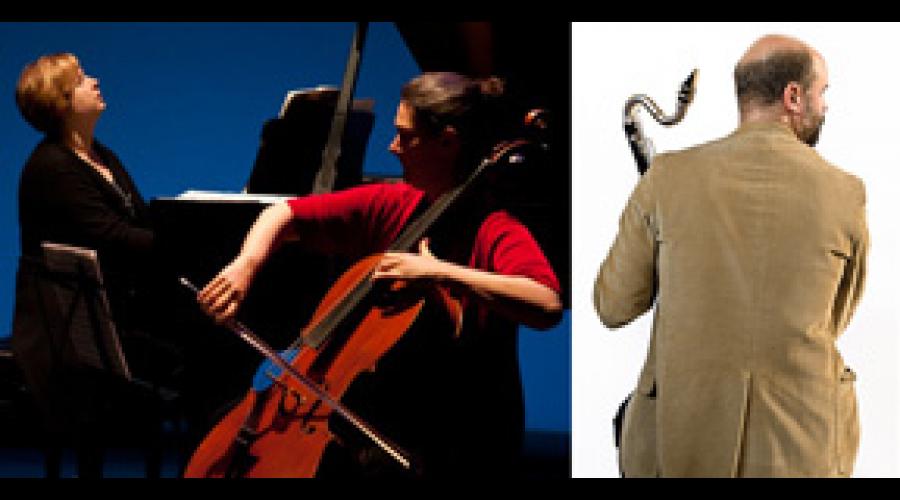

Richard Andrews
CNMAT, UC Berkeley, 1750 Arch St., Berkeley, CA 94709
Timbre, usually defined as the condition of attributes other than pitch, loudness, and duration, plays a strong role in determining the perceptual organization of musical patterns. Timbre's primary organizational influence appears to be on perceptual grouping, as in auditory stream segregation and rhythmic segmentation. Grouping by timbre can influence the tonal implications of otherwise ambiguous pitch material.
In this paper, we present soft computing tools and techniques aimed at realizing musical instruments that learn. Specifically we explore applications of neural network and fuzzy logic techniques to the design of instruments that form highly personalized relationships with their users through self-adaptation. We demonstrate techniques for adapting sensor arrays and techniques for realizing highly expressive real-time sound synthesis algorithms.
Adrian
Freed, Tristan Jehan
Adrian Freed
Adrian Freed
ABSTRACT